
10 Day France Itinerary: Paris, Lyon & Provence + Free Google Sheets Template
Matt - August 18, 2026
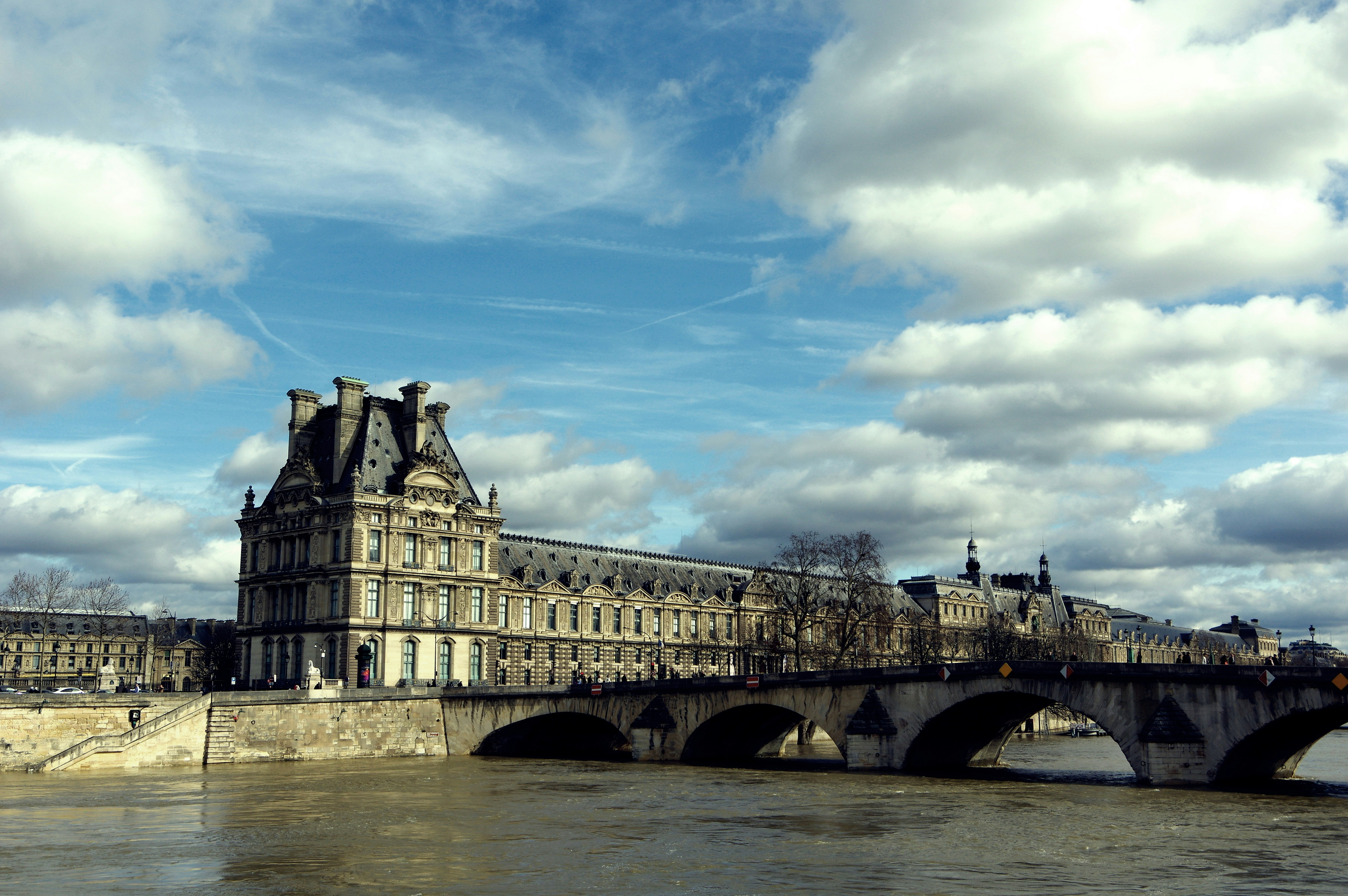
Ten days in France gives you enough time to combine Paris with two very different parts of the country. This itinerary begins with three nights in Paris, continues with three nights in Lyon and a day trip to Annecy, and finishes with three nights in Avignon for Roman sites, Provencal cities, and Pont du Gard.
The trip works especially well by train. Paris, Lyon, and Avignon are the three lodging bases, so you can settle into each city and use regional trains or planned day trips for the surrounding stops. The route includes major museums and landmarks, but it also leaves time for neighborhood walks, markets, riverside views, and meals that help each place feel distinct.
You can use the free 10 Day France Itinerary Google Sheets template as the itinerary for your own trip. It includes the day-by-day plan, lodging bases, train transfers, attraction links, optional activities, packing items, pre-trip tasks, costs, and sample cost-splitting rows.

Itinerary Outline
- Days 1-3: Paris, including the Seine, Louvre, Ile de la Cite, Eiffel Tower, Arc de Triomphe, Montmartre, and an evening river cruise
- Days 4-6: Lyon, with Vieux Lyon, Fourviere, the Presqu'ile, and a day trip to Annecy
- Days 7-10: Avignon, Arles, Pont du Gard, Nimes, and departure from Provence
This route is a good fit for a first trip that combines famous landmarks with regional food, historic neighborhoods, Alpine scenery, and Roman heritage. Paris and Lyon offer broad public transportation networks, while Avignon puts several of Provence's most rewarding day trips within reach.
Best time and pacing for this France itinerary
April through June and September through October generally bring comfortable walking weather and fewer peak-season crowds than July and August. Spring gardens and long early-summer evenings are appealing in Paris and Lyon, while September often works well for Provence and the surrounding wine regions.
July and August bring the warmest weather, the longest daylight, and the busiest conditions at major attractions. Reserve long-distance trains, popular museums, Eiffel Tower tickets, and central lodging early. Provence can be hot in the afternoon, so morning starts are useful for exposed Roman sites and Pont du Gard.
Winter can be a good option for museums, restaurants, and seasonal events, though daylight is shorter and some tours or smaller attractions may have reduced schedules. Annecy has a different atmosphere in colder months, with mountain views and a quieter lakefront replacing summer swimming and boat trips.
Three lodging bases keep the itinerary manageable. The travel days are short enough to include a walk or attraction after arrival, and the Annecy, Arles, and Pont du Gard excursions return to the same hotel that evening.
Day 1: Arrive in Paris and walk along the Seine
Most international visitors arrive at Charles de Gaulle Airport. Allow time for passport control, luggage, and the transfer into central Paris before making plans for the afternoon. Le Marais and Saint-Germain-des-Pres are both convenient first-visit bases with restaurants, Metro access, and interesting streets immediately outside the hotel.
After checking in, take an easy walk along the Seine and across Ile Saint-Louis. The island is known for its 17th-century townhouses, narrow streets, river views, and small shops. Continue toward the western end of the island for a first look at Notre-Dame and the bridges around Ile de la Cite.
Choose dinner in Le Marais or the Latin Quarter. Le Marais combines historic streets with contemporary restaurants and cafes, while the Latin Quarter has a lively mix of bistros, bookstores, student life, and older institutions around the Sorbonne.
Day 2: The Louvre, Tuileries, and Ile de la Cite
Reserve the morning for the Louvre Museum. The collection covers ancient Egypt, Greece and Rome, European painting, sculpture, decorative arts, and the history of the former royal palace. The museum is vast, so choose several departments or specific works in advance and allow time for the rooms between them.
After the museum, walk through the Tuileries Garden. Its formal paths, terraces, ponds, and sculptures create a natural break between the Louvre and Place de la Concorde. The arcades and courtyards of Palais Royal are nearby and are easy to add before lunch or coffee.
Spend the later afternoon around Ile de la Cite. See Notre-Dame's restored exterior and interior if current access allows, then visit Sainte-Chapelle for its tall stained-glass windows and intimate upper chapel. The Conciergerie, flower market, and riverfront paths can fill the remaining time according to your interests.

Day 3: Eiffel Tower, Champs-Elysees, and Montmartre
Begin at the Eiffel Tower. Advance tickets are useful if you want to visit the upper levels, and morning entry often makes the rest of the day easier to arrange. Walk through Champ de Mars afterward or cross the Seine to Trocadero for a broader view of the tower.
Continue to the Arc de Triomphe. The rooftop terrace looks across the avenues that radiate from Place Charles de Gaulle, including the Champs-Elysees and the axis toward La Defense. Walk a section of the avenue, then use the Metro to reach Montmartre.
Montmartre's hilltop streets lead to Sacre-Coeur, Place du Tertre, small museums, cafes, and viewpoints over Paris. The area is busiest around the basilica and main square, while side streets around Rue de l'Abreuvoir and the northern slope offer a quieter walk.
Finish with an evening Seine cruise if the weather is clear. The river provides a different view of the Louvre, Notre-Dame, the Eiffel Tower, and the bridges after the city lights come on.
Day 4: Train to Lyon and explore the Presqu'ile
Take a morning high-speed train from Paris Gare de Lyon to Lyon Part-Dieu. Check the current schedule and fares through SNCF Connect, then choose a train that leaves enough time for lunch and an afternoon walk after arrival.
Stay on the Presqu'ile or near Vieux Lyon. The Presqu'ile sits between the Rhone and Saone rivers and contains Place Bellecour, major shopping streets, restaurants, museums, and easy transit connections. Vieux Lyon offers Renaissance architecture and direct access to Fourviere, with more visitors in its main lanes during the day.
Walk from Place Bellecour toward Place des Jacobins, Rue Merciere, and the Saone riverfront. Cross one of the pedestrian bridges for views back toward the old city and Fourviere Basilica above it.
For dinner, try a traditional bouchon. These small Lyon restaurants are associated with hearty local dishes such as quenelles, sausages, lentils, pike, offal preparations, and praline desserts. Menus vary, so choose a place whose current offerings suit your group.

Day 5: Fourviere, Roman Lyon, and Vieux Lyon
Ride the funicular from Vieux Lyon to the Basilica of Notre-Dame de Fourviere. The hilltop terrace gives a broad view across the city's rivers, rooftops, and modern districts. Inside, mosaics, stained glass, marble, and gilded decoration cover much of the upper church.
Walk to the nearby Gallo-Roman theatres, which formed part of the ancient city of Lugdunum. The larger theatre once hosted performances for thousands of spectators, while the smaller odeon was used for music and recitation. The Lugdunum museum adds mosaics, inscriptions, household objects, and models that explain Lyon's Roman past.
Return downhill to Vieux Lyon. Explore the lanes around Saint-Jean Cathedral and look for the covered passageways known as traboules. Some are open to visitors, while others remain part of residential buildings, so follow posted access guidance.
Spend the evening around the Presqu'ile or Vieux Lyon. Lyon's food markets, bakeries, cheese shops, wine bars, and restaurants make it easy to enjoy several smaller stops across the day.
Day 6: Annecy day trip from Lyon
Take a morning train from Lyon to Annecy. Schedules vary, but the journey usually works as a full-day excursion with enough time for the old town and lakefront. Check the return options before leaving Lyon so you can choose the pace of the afternoon.
Annecy's old town follows the Thiou River through arcaded streets, pastel buildings, canals, and small bridges. The medieval Palais de l'Ile sits on a triangular island in the river and is one of the city's most recognizable landmarks. Nearby, the Chateau d'Annecy overlooks the rooftops and contains museum collections focused on regional art and history.
Walk through the Jardins de l'Europe to the Pont des Amours and continue along the shore of Lake Annecy. The water is framed by the French Alps, and the promenade has broad views toward the mountains and villages around the lake. In warmer months, a boat cruise or a longer lakeside walk can fill the afternoon.
Return to Lyon for dinner. If you prefer more time in Annecy, have an early evening meal there and take a later train back after checking the current timetable.

Day 7: Train to Avignon and visit the Palais des Papes
Travel from Lyon to Avignon by train. Some services arrive at Avignon TGV station outside the center, with a local train, bus, taxi, or transfer completing the trip to the historic city. Staying inside or just outside the medieval walls makes the main sights easy to reach on foot.
Begin at the Palais des Papes. The immense Gothic complex served as the papal residence during the 14th century. Grand halls, chapels, private apartments, courtyards, and surviving frescoes show both the ceremonial and residential sides of the palace.
Walk uphill to Rocher des Doms for gardens and views across the Rhone Valley, then continue to Pont Saint-Benezet. The bridge once crossed the Rhone, but repeated floods left only part of the medieval structure standing. Its remaining arches and chapel create one of Avignon's defining river views.
Choose dinner inside the walls around Place de l'Horloge, Rue des Teinturiers, or one of the smaller squares away from the main palace approach.

Day 8: Arles Roman sites and Van Gogh places
Take the regional train from Avignon to Arles. The compact historic center makes it possible to see several major sites on foot, beginning with the Roman Amphitheatre. Built in the first century, the arena remains a defining part of the city and still hosts events.
Continue to the Roman Theatre, then walk toward Place de la Republique and the Church of Saint-Trophime. The church portal is known for detailed Romanesque sculpture, while the cloister combines Romanesque and Gothic architecture around a quiet central courtyard.
Arles is also closely associated with Vincent van Gogh, who lived in the city in 1888 and 1889. Places represented in his paintings include the cafe on Place du Forum, the Rhone riverfront, and the courtyard of the former hospital now known as Espace Van Gogh. The original paintings are generally held elsewhere, but the settings help connect his work to the streets and light of Arles.
Return to Avignon in the late afternoon and visit Les Halles market area before dinner if the shops and stalls are still open.
Day 9: Pont du Gard and Nimes
Use the day for two of the region's strongest Roman sites. A rental car or organized excursion gives the simplest connection between Avignon, Pont du Gard, and Nimes. Public transport can work on selected dates, but schedules require closer planning.
Pont du Gard is a three-level Roman aqueduct bridge built to carry water toward ancient Nimes. Paths on both sides of the Gardon River reveal the scale of the structure, while the museum explains Roman engineering, construction, and the wider aqueduct system. Allow time for the viewpoints and riverbank as well as the bridge itself.
Continue to Nimes for the Roman arena and Maison Carree. The arena is among the best-preserved Roman amphitheatres and still dominates the center of the city. Maison Carree is a remarkably complete Roman temple with balanced columns and a prominent position above the surrounding square.
Return to Avignon for a final dinner. Keep the evening close to your lodging if you have an early train or flight connection the next morning.

Day 10: Depart from Avignon
For a later departure, begin with breakfast near Les Halles or a short walk along the city walls. Avignon TGV station connects with Paris and other major cities, while Marseille Provence Airport is a practical international departure point for some itineraries.
Check the full transfer before booking the final ticket. A same-day high-speed train to Paris can work for a later flight, but an overnight near the departure airport may be more convenient for an early international flight.
Where to stay in Paris, Lyon, and Avignon
Paris: Le Marais suits travelers who want historic streets, galleries, restaurants, and central walks. Saint-Germain-des-Pres provides classic Left Bank cafes and easy access to the Seine. Areas around Opera, the Louvre, and the Latin Quarter can also work well depending on budget and Metro connections.
Lyon: The Presqu'ile is the most convenient all-around base for restaurants, shopping, river walks, and transit. Vieux Lyon offers historic atmosphere and quick access to Fourviere. Part-Dieu is useful for an early train but feels more business-oriented than the central districts.
Avignon: Staying inside the walls puts the Palais des Papes, restaurants, shops, and evening walks close by. The area near Avignon Centre station is convenient for regional trains to Arles and Nimes. Check whether your train arrives at Avignon Centre or Avignon TGV when comparing hotels.
Transport and booking logistics
- Book Paris-to-Lyon and Lyon-to-Avignon high-speed trains early when your dates are fixed; lower advance fares can sell out.
- Check whether each Avignon train uses Avignon Centre or Avignon TGV and include the transfer between stations when needed.
- Reserve timed entry for the Louvre, Eiffel Tower, Sainte-Chapelle, and other high-demand attractions before the trip.
- Review the Annecy train schedule in both directions before choosing how long to stay at the lake.
- Use regional trains for Avignon-to-Arles and Avignon-to-Nimes, then compare a car, tour, or current public transport for Pont du Gard.
- Confirm event schedules at the Roman arenas in Arles and Nimes because access can change around performances and festivals.
- Keep digital and offline copies of train tickets, attraction reservations, lodging details, and travel insurance information.
Book these parts first: the long-distance trains, Paris lodging, timed Eiffel Tower and Louvre visits, and any guided day trip that includes Pont du Gard. Restaurant reservations are useful for particular dining experiences in Paris and Lyon, while many neighborhood bistros and cafes can be chosen during the trip.
Optional ideas and itinerary changes
- Versailles: Add a full day from Paris for the palace, gardens, Grand Trianon, and Queen's Hamlet.
- Musee d'Orsay: Add several hours for Impressionist and Post-Impressionist works in the former railway station beside the Seine.
- Canal Saint-Martin: Spend an afternoon around the canal, nearby cafes, shops, and northeastern Paris neighborhoods.
- Croix-Rousse: Explore Lyon's former silk-weaving district, market streets, murals, and hillside views.
- Musee des Confluences: Add Lyon's science and anthropology museum at the meeting point of the Rhone and Saone.
- Beaujolais: Use a day from Lyon for vineyard villages and tastings with a driver or guided tour.
- Luberon villages: Add Gordes, Roussillon, Bonnieux, or Lourmarin with a car or day tour from Avignon.
- Saint-Remy and Les Baux: Combine the market town, Van Gogh sites around Saint-Paul-de-Mausole, and the hilltop village of Les Baux-de-Provence.
- Orange: Visit the Roman Theatre and triumphal arch on a regional train trip north of Avignon.
- Chateauneuf-du-Pape: Arrange a winery visit and transportation for a focused Rhone Valley wine day.
What the France Google Sheets itinerary template includes
- A scheduled Paris, Lyon, Annecy, Avignon, Arles, Pont du Gard, and Nimes itinerary
- Unscheduled ideas for museums, neighborhoods, day trips, wine regions, markets, and additional historic sites on the Itinerary tab
- Specific locations, official links, lodging notes, train reminders, and booking details
- A packing list and pre-trip checklist tailored to this France trip
- Cost fields and sample split-cost rows for shared travel expenses
For a general planner you can adapt to any trip, see the free Google Sheets travel planner and itinerary template.
How Travel Mapper helps with a France trip
The free Google Sheets itinerary gives you one place for dates, hotels, trains, tickets, activities, costs, and notes. The Travel Mapper Google Sheets add-on adds a map beside the itinerary so you can compare the locations of Paris neighborhoods, see how Lyon and Annecy fit together, and review the day-trip options around Avignon.
You can fine-tune the schedule with drag-and-drop itinerary editing, use Google Maps autofill while adding places, email the itinerary, and export it to Google My Maps. The Travel Mapper Chrome extension can also add an activity from a hotel, restaurant, museum, or attraction page you are researching.
If you want to review or edit the trip from your phone while traveling, the Travel Mapper web app works in a mobile browser.
France itinerary FAQ
Is 10 days enough for Paris, Lyon, and Provence?
Ten days is enough for three nights in Paris, three nights in Lyon, and three nights in Avignon, with day trips to Annecy, Arles, Pont du Gard, and Nimes. Add several days if you want to include the French Riviera, the Loire Valley, Normandy, or a slower stay in Provence.
Do I need a car for this France itinerary?
No car is needed in Paris, Lyon, Annecy, Avignon, Arles, or Nimes. Trains connect the three lodging bases and most day-trip cities. A one-day rental car, private driver, or organized tour is useful for Pont du Gard and for rural Provence options such as the Luberon or Chateauneuf-du-Pape.
How far ahead should I book trains in France?
Book long-distance high-speed trains after your dates are firm, especially for peak summer weekends and holidays. Regional train tickets are usually more flexible, though checking the schedule in advance is still useful for day trips.
Is Annecy worth a day trip from Lyon?
Yes. Annecy adds Alpine scenery, a canal-lined old town, lakeside walks, and seasonal boat trips to an itinerary otherwise focused on larger cities and historic sites. An early departure from Lyon gives you enough time to explore without changing hotels.
Should I stay in Avignon or Aix-en-Provence?
Avignon is the stronger base for this itinerary because regional trains connect easily with Arles and Nimes, and Pont du Gard is nearby. Aix-en-Provence is a good alternative for travelers prioritizing markets, cafes, Cezanne sites, and access toward Marseille or the Luberon.
Can I add the French Riviera to this route?
Add at least three nights for Nice, Monaco, Antibes, or nearby coastal towns. The simplest extension is to continue southeast after Avignon and give the Riviera its own part of the trip.
Use the free France itinerary template to customize the trip, then install Travel Mapper when you want to see your itinerary on a map and refine your plans inside Google Sheets.